Kitchen gifts that outlast the cook who gets them: cast iron, a forged knife, a maple board, a pan with no non-stick to wear off.
A cook already owns a pan. The gift is the one that ends the replacing: cast iron that gets better the more it is used, a forged knife that takes an edge for decades, a maple board that can be sanded back to new.
Nothing here has a non-stick layer to wear through or a motor to fail. Every one of them is the kind of thing that gets handed down with the kitchen.
Black Friday is 27 November 2026 and Christmas follows. These are
gifts that last, so the guide holds whenever you shop. Listings last checked undefined undefined NaN.
Some buy links are affiliate links. If you buy through one we may earn a
commission, at no extra cost to you.
How this is funded.
Enamelled cast iron made in France, in a matte black interior enamel rather than the pale glossy kind, which is the practical difference between Staub and the alternative: a dark textured interior browns better and does not show every mark. The lid is deliberately heavy so the moisture that rises falls back, and the whole thing is oven safe to 500F with nothing on it to peel.
Forged from one piece of stainless in Solingen, with a full bolster and a tang that runs the length of the handle, which is what makes a knife this heavy feel balanced instead of blade heavy. The Classic line has been made to the same pattern for decades and the factory will regrind one sent back to it. Thicker and softer than a Japanese blade, which means it takes an edge more easily and holds it less long.
Boos has been gluing up hard maple in Effingham, Illinois since 1887, and this is the plain reversible board from that line. Maple is hard enough to resist scoring and soft enough not to blunt a knife, which is the whole reason butchers have used it for a century and a half.
Three bonded layers of stainless steel and aluminium all the way up the sides, with a riveted stainless handle and no nonstick coating to wear off. Made in the USA and covered by All-Clad's limited lifetime warranty.
Lodge has been making cast iron in Tennessee since 1896, and this skillet ships pre-seasoned and ready to cook. Cast iron improves with every use, the seasoning deepening over years, and owners routinely cook on skillets inherited from grandparents. It is the simplest thing on this site that will outlive its owner.
Turned from hardwood in Maine, with a two-step stainless mechanism that cracks the corn before it grinds it. The mechanism pops out for cleaning rather than being sealed into the base, which is the part that goes wrong on cheaper mills.
A single stainless steel blade, photo-etched rather than stamped, set in a handle with no hinge, spring or moving part, so there is nothing to loosen or snap.
Photo-etched stainless steel blade
No moving parts
Zests citrus, grates hard cheese, garlic, ginger and nutmeg
Kitchen shears that come apart, which sounds trivial and is the entire point: a pair that separates can be cleaned properly after raw chicken and can be sharpened properly afterwards, while a riveted pair can do neither. Japanese stainless, micro serrated on one blade so poultry skin cannot slide away from the cut.
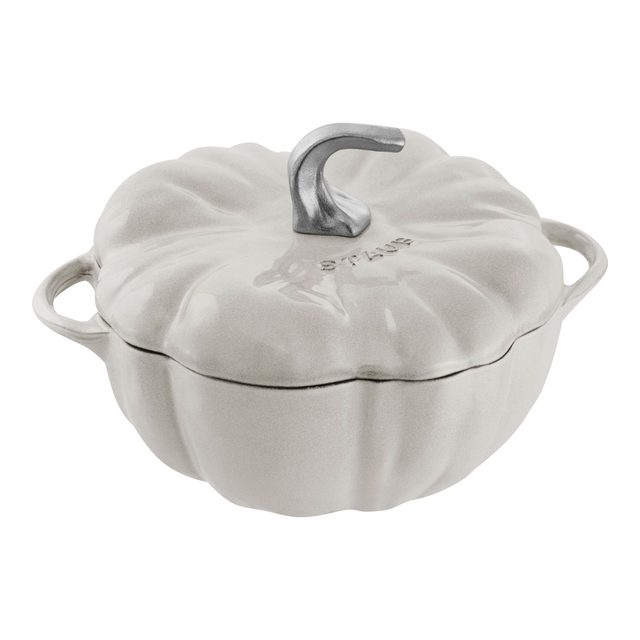 Product photograph, STAUB
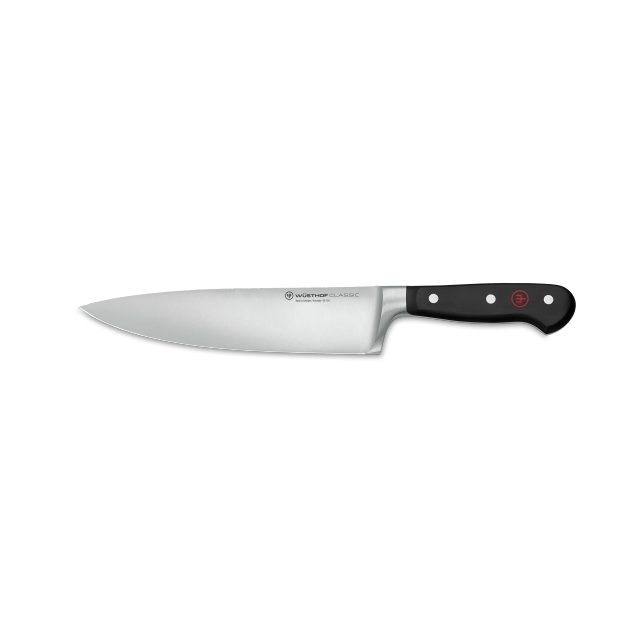 Product photograph, Wüsthof
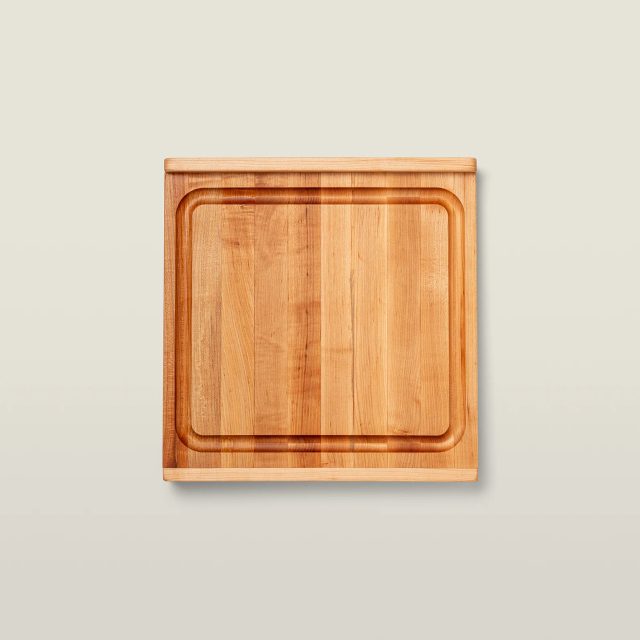 Product photograph, John Boos
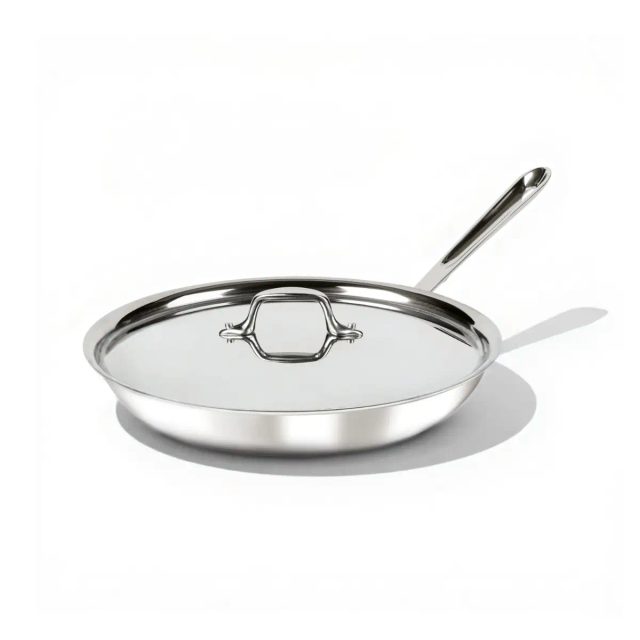 Product photograph, All-Clad
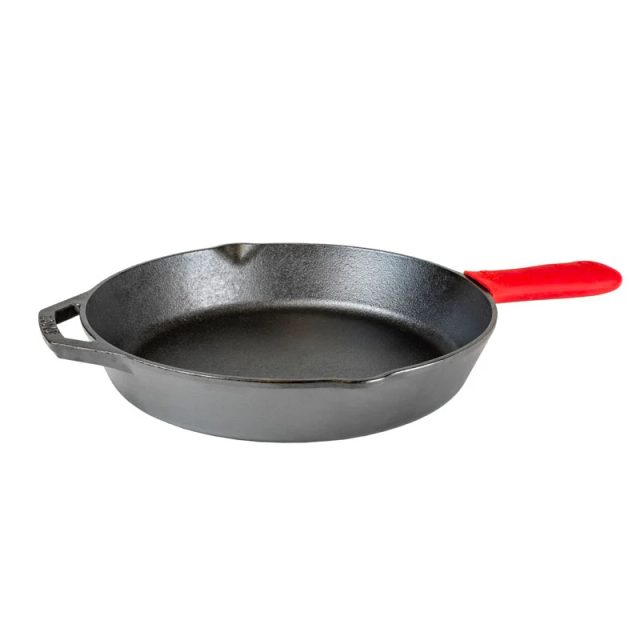 Product photograph, Lodge
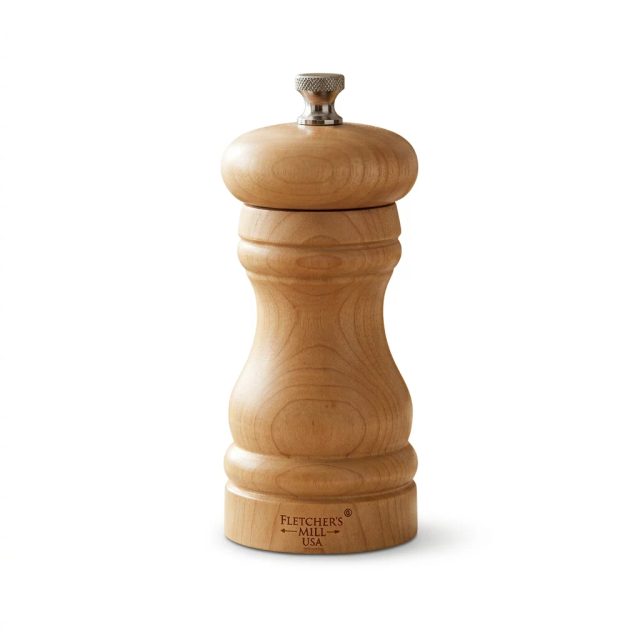 Product photograph, Fletchers' Mill
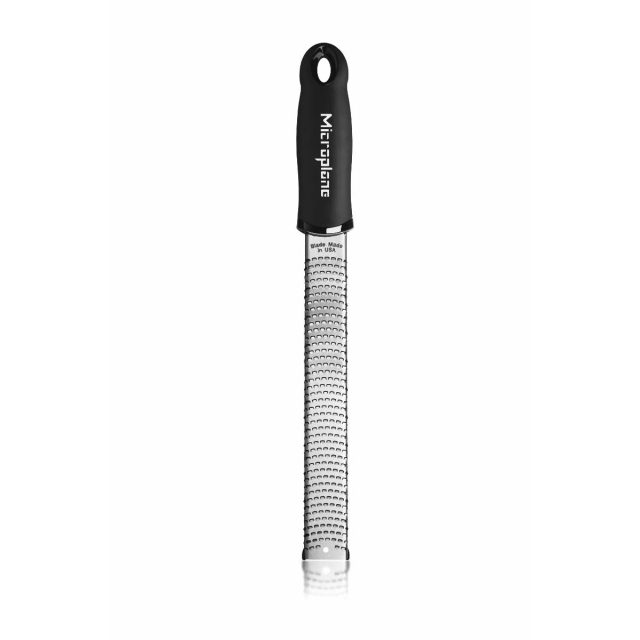 Product photograph, Microplane
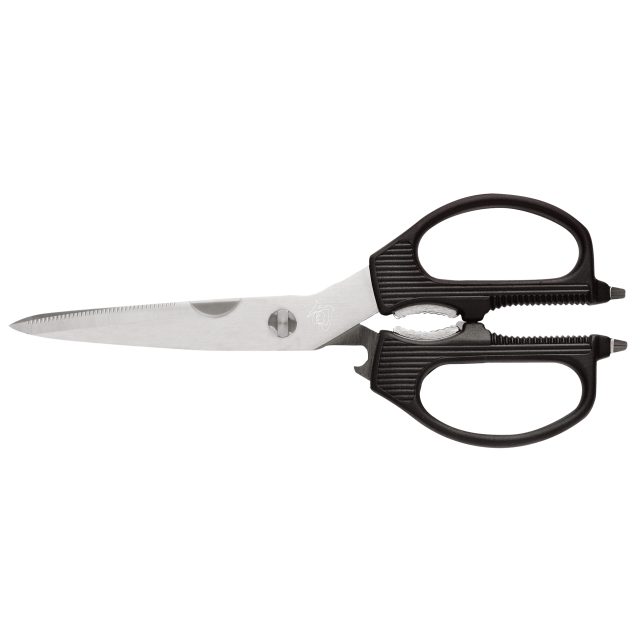 Product photograph, Shun