Steel bodies with the plastic kept to the parts that lift out and are replaced.
A kitchen bin is the most used hinge in the house, opened and shut several times a day for a decade, and the cheap ones fail at exactly that hinge. The ones here are steel bodied with a pedal mechanism rated in the hundred thousands of presses, a lid damped so it cannot be slammed, and an inner bucket that lifts out, which is the only part that ever needs replacing. The same argument holds for a dish rack: a steel frame outlives a plastic one, and the tray beneath it is a part.
Some buy links are affiliate links. If you buy through one we may earn a
commission, at no extra cost to you.
How this is funded.
At a glance: Bins and Dish Racks picks compared, with buy links
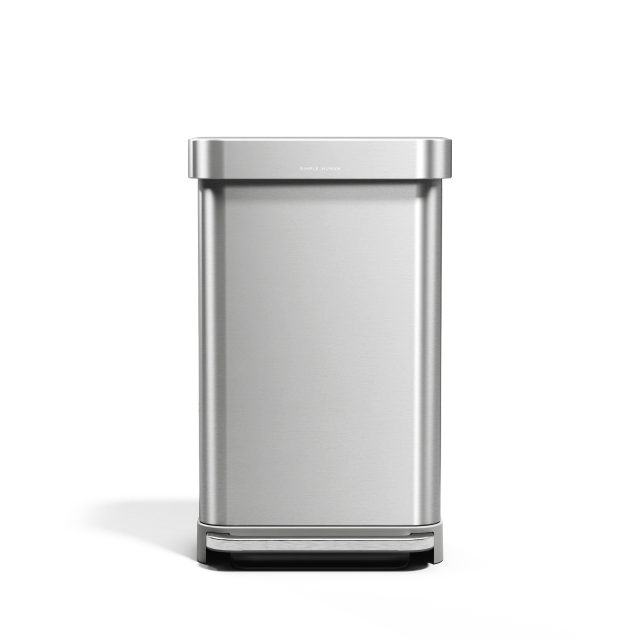
The pedal is rated at 150,000 presses, which is more than twenty a day for twenty years, and it is the part that decides whether a bin lasts: everything else here is a folded steel box. The lid is damped so it cannot be slammed, the liner locks into a rim rather than slipping down the sides, and the bucket lifts out.
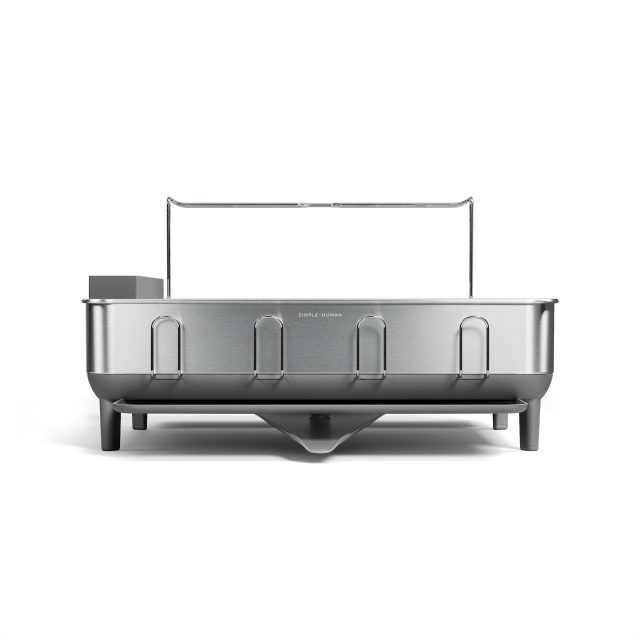
A steel frame rather than a coated wire one, which is the difference that matters in a thing that stands in water every day: a chipped coating rusts from the inside out, and there is no coating here to chip. The drip tray and the swivelling spout are plastic, and both lift out, so the parts that take the standing water are the parts you can replace.
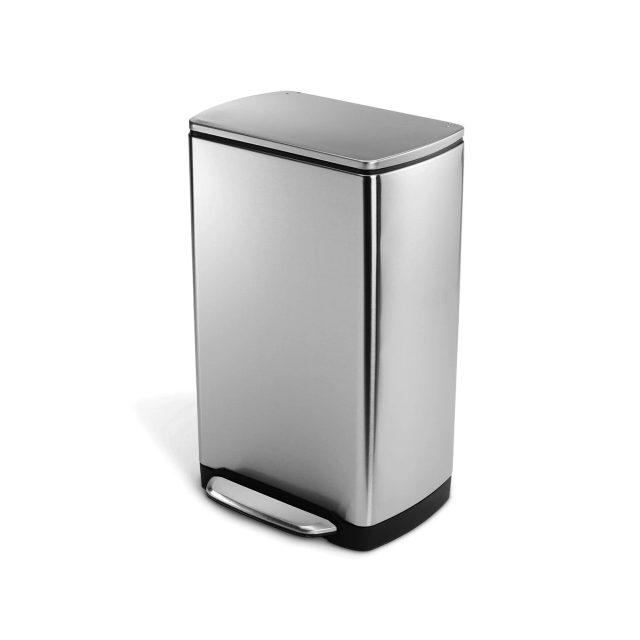
The deepest record of any bin here, and the shape to buy if it has to sit flush: the hinge is internal, so the lid opens without the back of the can needing clearance from the wall. Same pedal rating and the same damped lid as the larger one, with a recycled plastic bucket that lifts out.
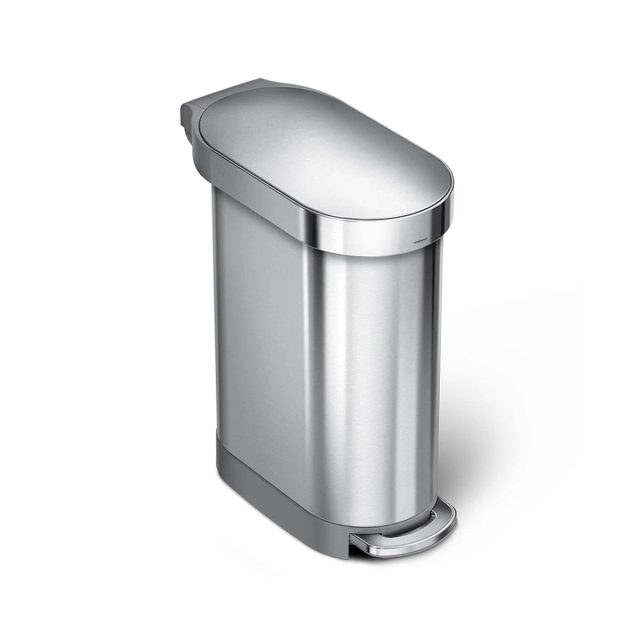
The narrow one, which holds the same 45 litres in a footprint that fits the gap between a cabinet and a wall where a round can will not go. Same steel body, same pedal rating, same damped lid; what it trades is the shape of the opening.
45 litres in a narrow footprint
Pedal rated to 150,000 presses
Damped lid, removable bucket
Fits gaps a round can cannot
Weekly email
New picks, once a week.
One email a week with new picks. Unsubscribe any time.
Privacy.
 Product photograph, simplehumanTop pick
 Product photograph, simplehuman
 Product photograph, simplehuman
 Product photograph, simplehuman