Brewers made of plastic on purpose, for the kitchen floor, the campsite and the bag.
Everything here is plastic, and that is the reason it is here rather than an apology for it. A glass carafe and a ceramic cone make better coffee arguments and worse travelling companions, and the brewer that survives being knocked off a counter is the one with nothing brittle in it. These all work the same way: steep the grounds, then force or release the coffee through a filter. No pump, no element, no electronics, and on the presses the only part that wears is a rubber seal sold for a few dollars.
Some buy links are affiliate links. If you buy through one we may earn a
commission, at no extra cost to you.
How this is funded.
At a glance: Unbreakable Brewers picks compared, with buy links
Two plastic tubes and a rubber seal. That is the entire mechanism, and it is why the AeroPress has no meaningful failure mode: the seal is the only wear part and AeroPress sells replacements for a few dollars. The design has not changed since 2005, so a seal bought today fits a press bought then, and the thing is light enough and tough enough to travel in a rucksack without a case.
The same two tubes and a seal as the original, shortened to fit inside its own mug so the whole brewer travels as one object. The seal is the only part that wears and AeroPress sells it on its own.
The AeroPress scaled up to make three or four cups instead of one, which is the version that works for a household rather than a desk. Two pieces of polypropylene and a rubber seal, with the seal sold as a spare, so the only part that ages is the only part you replace.
A press that brews into its own cup and packs down into it, with a stainless filter rather than paper so there is nothing to run out of. Nothing in it is powered, nothing in it is glass, and the only part that wears is a seal.
A brewing container, a rainmaker lid and a borosilicate carafe, with a stainless mesh filter instead of paper. Nothing in it is powered and the filter is the only part that can clog, which a rinse fixes.
Stainless mesh filter, no paper
Borosilicate glass carafe
Switch-controlled drain, no valve to hold shut
No electronics and no heating element
Makes about 12 servings of concentrate
Weekly email
New picks, once a week.
One email a week with new picks. Unsubscribe any time.
Privacy.
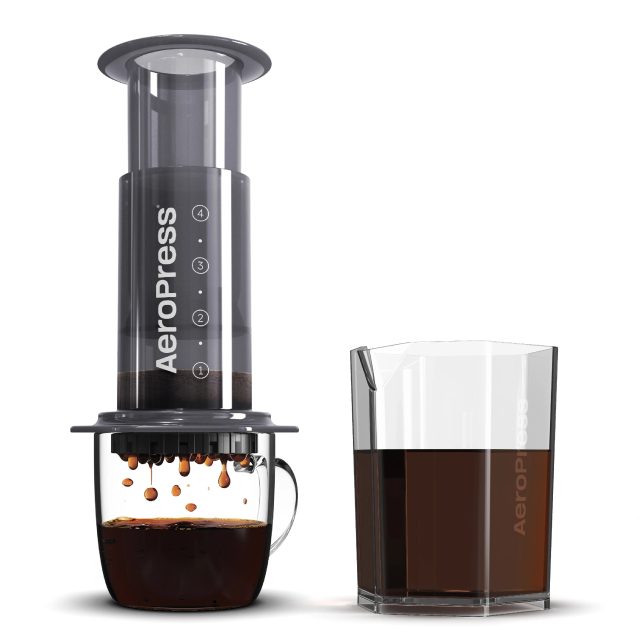 Product photograph, AeroPressTop pick
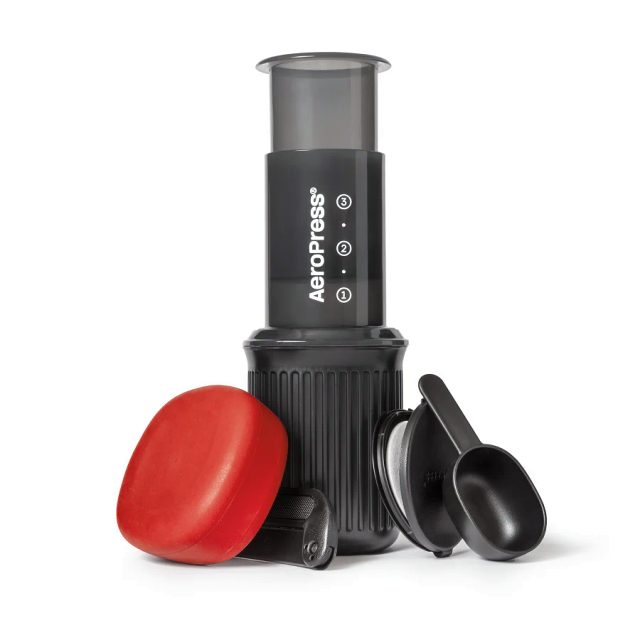 Product photograph, AeroPress
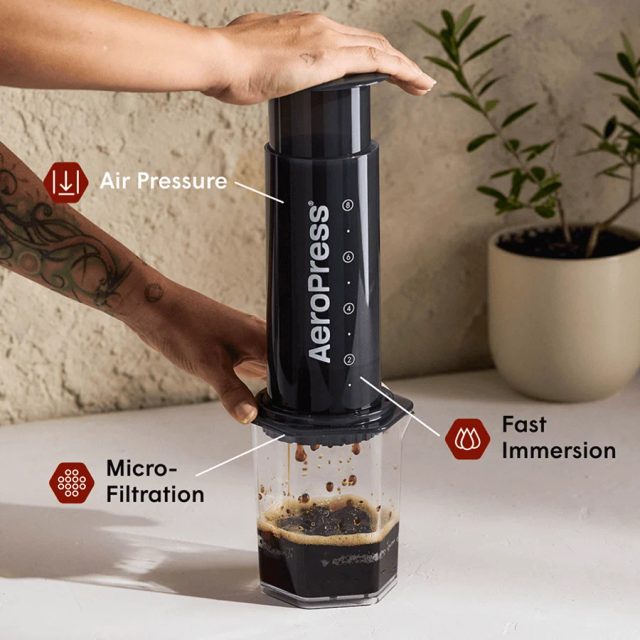 Product photograph, AeroPress
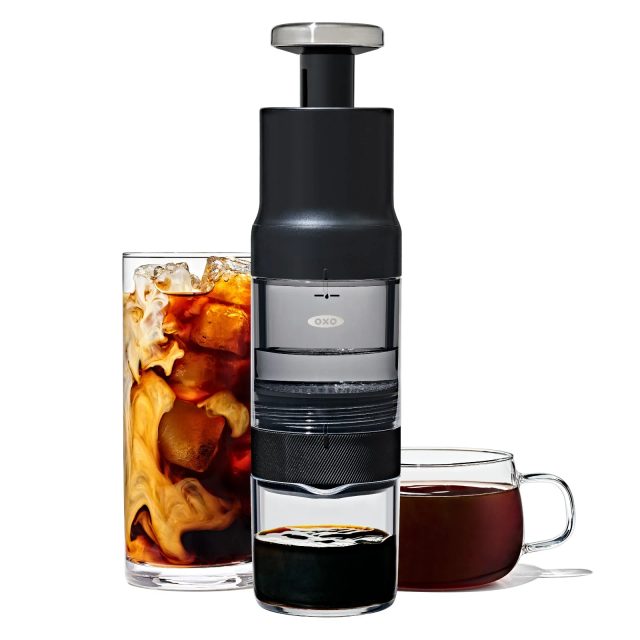 Product photograph, OXO
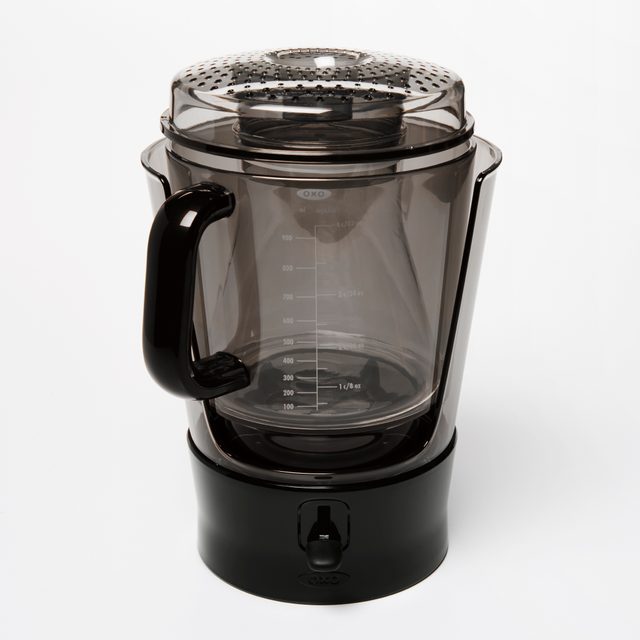 Product photograph, OXO