Bare aluminium and cast iron, with no coating on any of it to scratch, blister or wear away.
Everything here is bare metal, and that is the whole selection. A coated tin bakes beautifully for a few years and then the coating starts to go, at which point there is nothing to be done except buy another one. Uncoated aluminium and seasoned cast iron have no such clock: the aluminium darkens and bakes better for it, the cast iron builds seasoning the way a skillet does, and a scraped corner is a scraped corner rather than the beginning of the end.
Some buy links are affiliate links. If you buy through one we may earn a
commission, at no extra cost to you.
How this is funded.
At a glance: Bakeware picks compared, with buy links
Seasoned cast iron in the one shape where the weight is an advantage: a loaf pan holds its heat while wet dough goes in, so the crust sets instead of stalling. It seasons like a skillet, takes nothing worse than a scrape, and at twenty dollars it is the cheapest bread tin that will outlive the oven it goes into.
Pure aluminium with a rolled steel rim, which is the detail that stops a sheet pan warping into a taco the first time it meets a hot oven. Two of the small size, which is the one that fits a toaster oven and a quarter of a dinner. No coating anywhere, so it darkens with age and bakes better for it.
Two 21 by 15 inch sheets, which is bigger than a half sheet and the size that actually fills a domestic oven shelf. Same uncoated aluminium and the same rolled rim as the rest of the range, in the size that makes a difference to anyone who roasts vegetables for more than two.
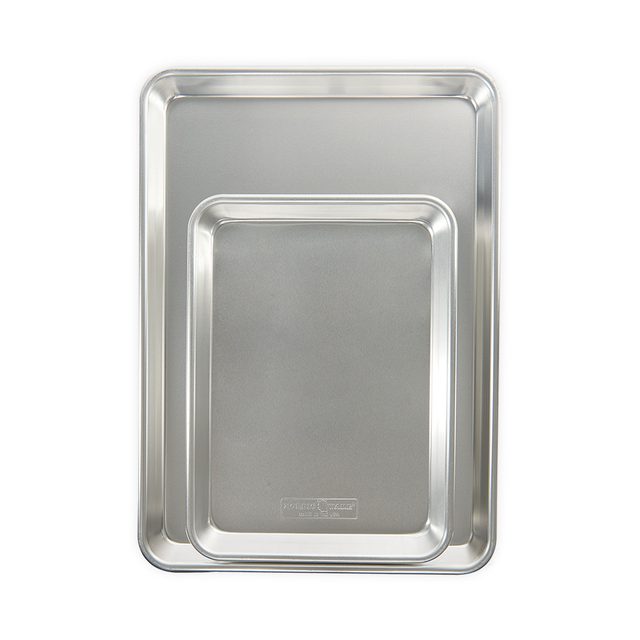
The two sizes a kitchen uses most, in one box: a half sheet for a tray of vegetables and a quarter for anything smaller. Uncoated aluminium with rolled steel rims, the same as the rest of the range, and the pair costs less than the half sheet alone did a few years ago.
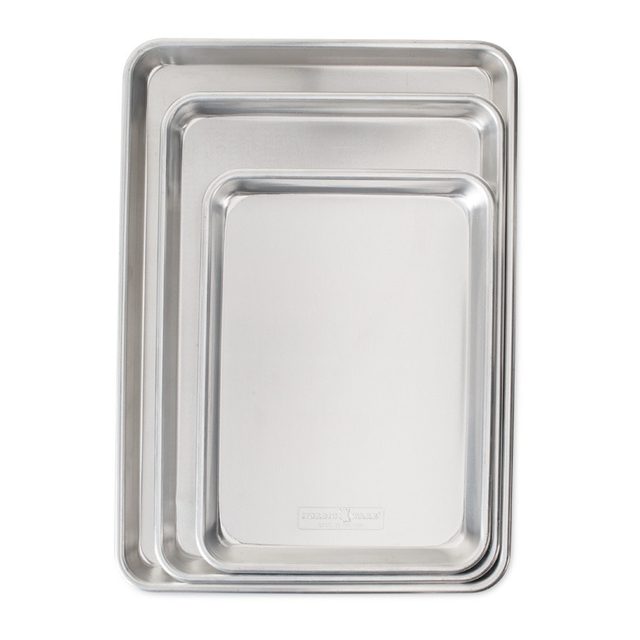
Three sizes in one box, which is how most kitchens should start: a big sheet, a half and a quarter, all in the same uncoated aluminium with the same rolled rim. The lower figure here against the single pans is about the set arriving dented rather than about the pans themselves, which is worth knowing before ordering.
Big, half and quarter sheets
Uncoated natural aluminium
Rolled steel rims
Made in the USA
Weekly email
New picks, once a week.
One email a week with new picks. Unsubscribe any time.
Privacy.
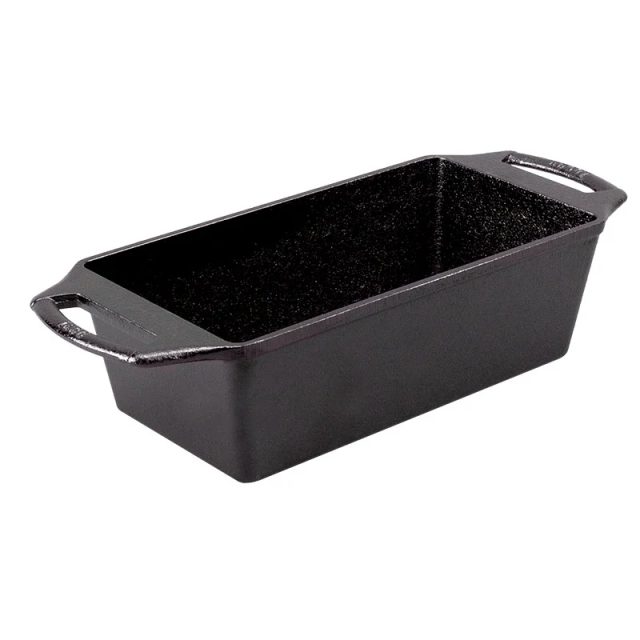 Product photograph, LodgeTop pick
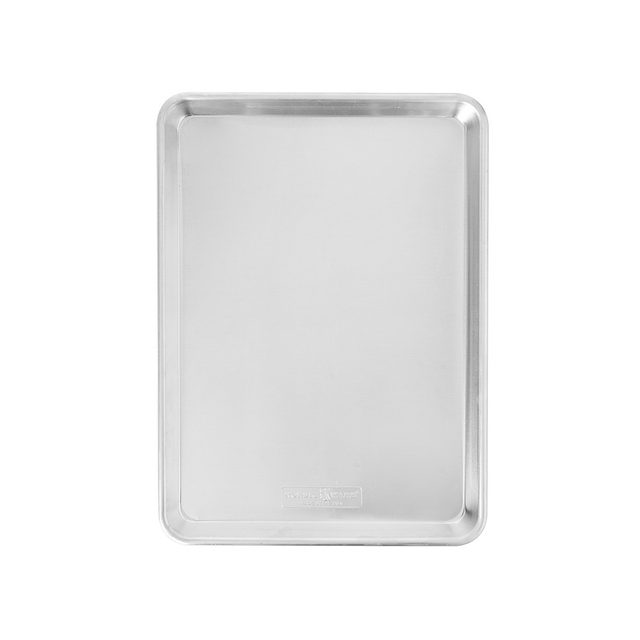 Product photograph, Nordic Ware
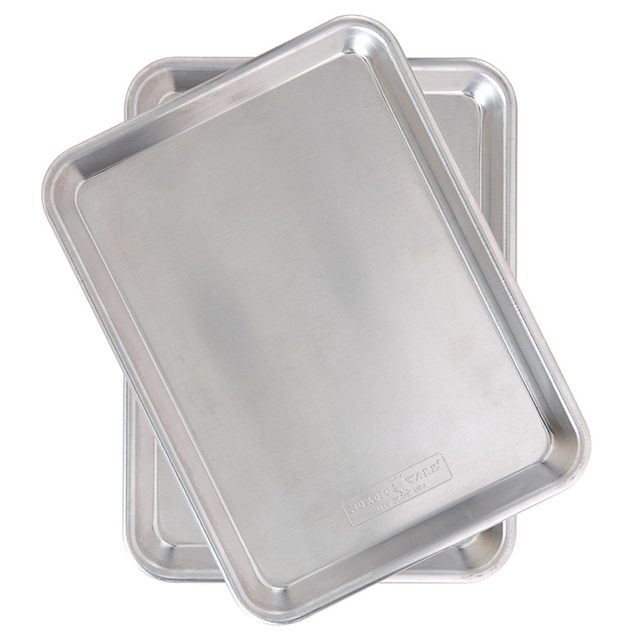 Product photograph, Nordic Ware
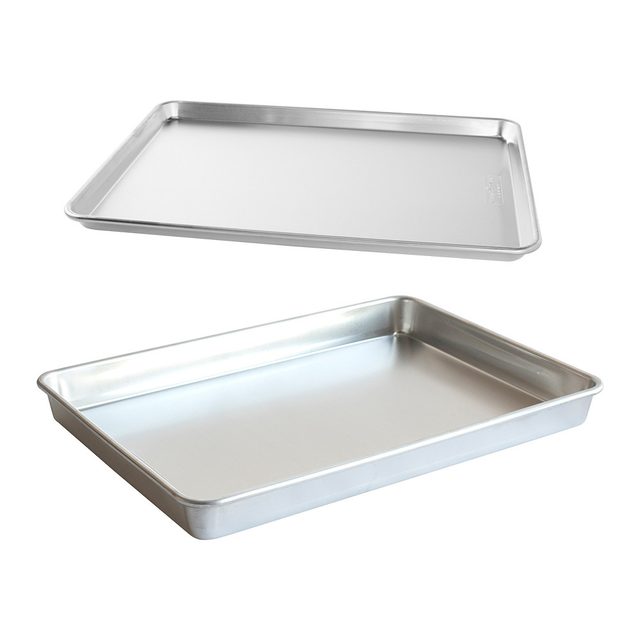 Product photograph, Nordic Ware
 Product photograph, Nordic Ware
 Product photograph, Nordic Ware