The one audio source with no firmware, and a needle you replace.
A record player is a motor, a platter and an arm. Nothing in it expires, nothing phones home, and the one part that genuinely wears out, the stylus, unscrews and costs less than a couple of records. Belts, mats and cartridges are all standard parts, so a deck from the 1980s is still serviceable today and the ones here are built to the same pattern rather than around a subscription.
Some buy links are affiliate links. If you buy through one we may earn a
commission, at no extra cost to you.
How this is funded.
At a glance: Turntables picks compared, with buy links
An MDF plinth heavy enough to stop the deck listening to itself, an aluminium platter with an acrylic mat, and an Audio-Technica VM95E cartridge whose stylus pulls off and replaces for about twenty dollars. The belt, the mat and the cartridge are all standard parts, which is the whole case for a belt drive at this price.
An MDF plinth, a metal platter and an Ortofon OM10 cartridge on a counterweighted tonearm, which is the line between a turntable and a record player: a real counterweight and adjustable tracking force means the stylus can be set properly, replaced when it wears and upgraded when it is outgrown. Belt driven, so the belt is a part, and it ships with a bubble level because the thing is meant to be set up rather than plugged in.
Counterweighted tonearm, adjustable tracking force
The LP120X with Bluetooth added, which sounds like the part that dates it and is not: the deck works as a plain analogue turntable with the radio switched off, so nothing about it stops when the standard moves on. Direct drive, pitch control, and a cartridge on a standard half-inch mount.
The deck that replaced the SL-1200 for most people who are not DJing for a living: direct drive, a proper tonearm with a removable headshell, and a body that has barely changed in two decades. The headshell being removable is the detail that matters, because it makes changing cartridges a two-minute job rather than a project.
A carbon fibre tonearm on a steel-tipped inverted bearing, with an adjustable counterweight and anti-skate, which is what separates a turntable you can keep from one you replace. Every part that wears is a standard one: the belt, the stylus and the cartridge, which sits on an ordinary half-inch mount.
Carbon fibre tonearm, adjustable counterweight and anti-skate
Sumiko Rainier cartridge on a standard half-inch mount
Belt drive, belt is a consumable part
Electronic speed change, 33 and 45
Made in Europe, no app and no account
Weekly email
New picks, once a week.
One email a week with new picks. Unsubscribe any time.
Privacy.
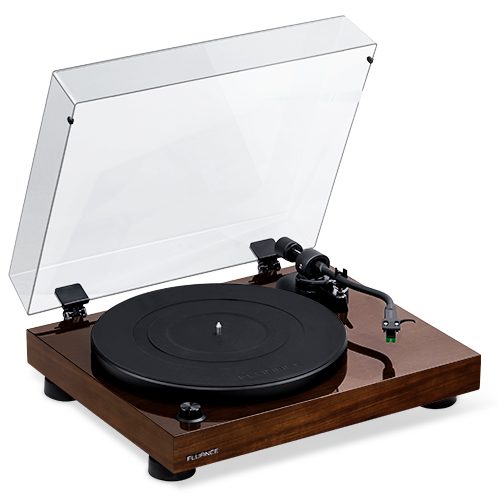 Product photograph, FluanceTop pick
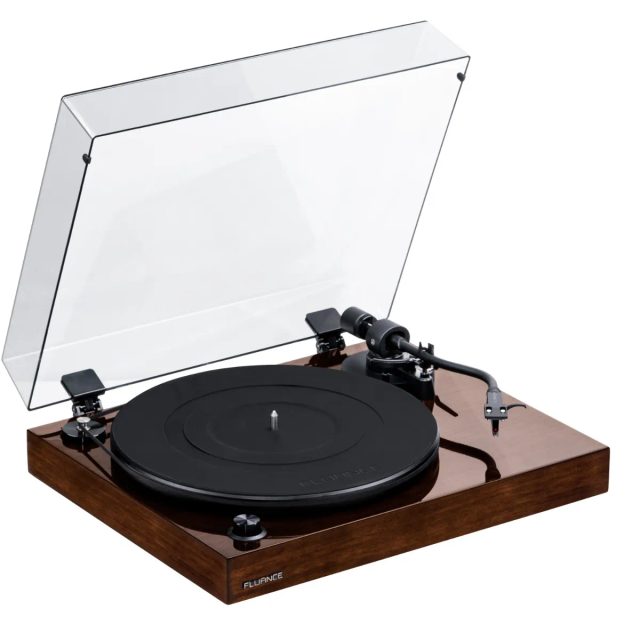 Product photograph, Fluance
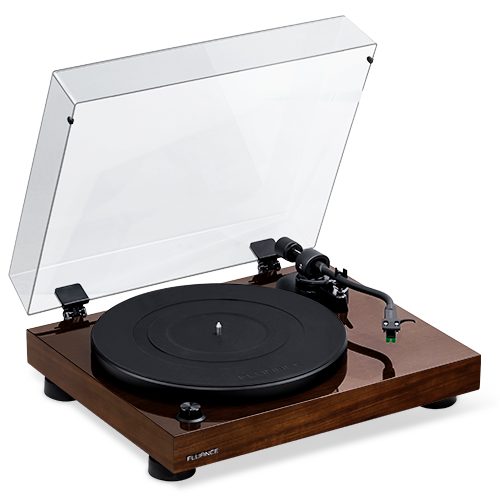 Product photograph, Fluance
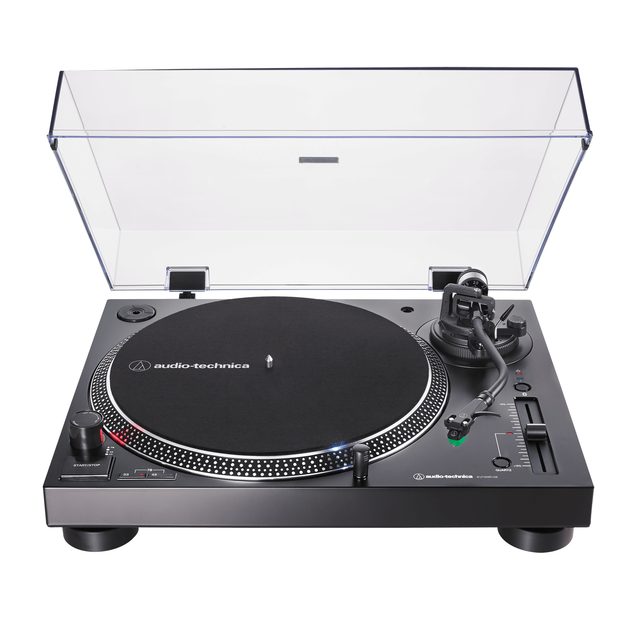 Product photograph, Audio-Technica
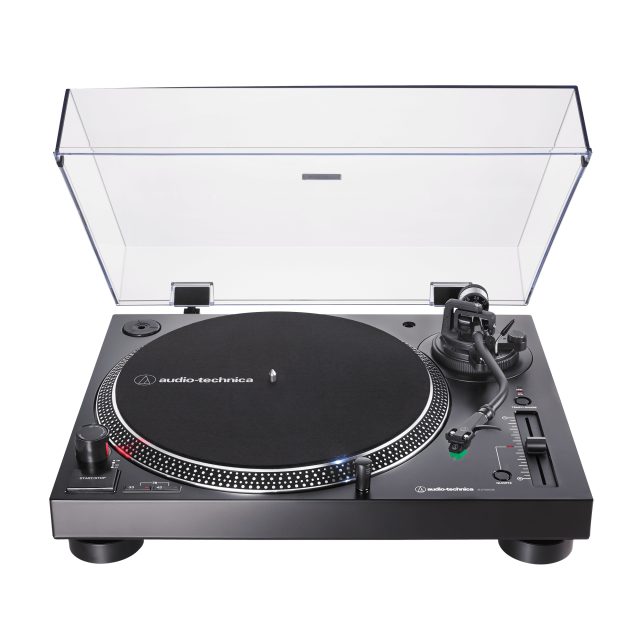 Product photograph, Audio-Technica