Wooden cabinet radios with a real tuner, a mains lead and no account to sign into.
A radio is the last broadcast device that cannot be discontinued. There is no app behind it, no service to shut down and no login, so a set bought today still receives in thirty years exactly as it does now. What separates a good one is the cabinet and the tuner: wood resonates where plastic rattles, and a proper analogue dial with a flywheel finds a weak station that a cheap digital scan walks straight past. Bluetooth, where it is here, is an extra rather than the point.
Some buy links are affiliate links. If you buy through one we may earn a
commission, at no extra cost to you.
How this is funded.
At a glance: Radios picks compared, with buy links
A walnut cabinet with a real AM and FM tuner, an aux input and Bluetooth added as a convenience rather than as the reason to own it. That distinction is the whole durability argument: the day the Bluetooth standard moves on, this is still a radio and still an amplifier for anything with a cable. Mains powered, so there is no battery to reach the end of its life.
Henry Kloss designed this in 2000 and it has not needed redrawing since: one knob for tuning, one for volume, one speaker, in a hardwood cabinet. The tuner is the reason audio people buy it, a genuinely sensitive analogue front end rather than a chip scanning for the strongest signal, and the single driver is a full range unit with no crossover to drift.
The plainest one here and the one with the deepest record: a wood cabinet, an analogue dial, a volume knob and nothing else. No Bluetooth, no aux, no display, which means there is nothing in it that a firmware update or a discontinued standard can touch. It will be a radio for as long as there are transmitters.
The upright walnut one, which is the shape for a shelf rather than a worktop, with analogue tuning and a screw terminal on the back for an FM aerial. That terminal is the detail worth paying for: a weak signal is fixed with a wire rather than with a different radio.
Upright walnut cabinet
Analogue tuning
FM aerial terminal on the back
Aux input
Weekly email
New picks, once a week.
One email a week with new picks. Unsubscribe any time.
Privacy.
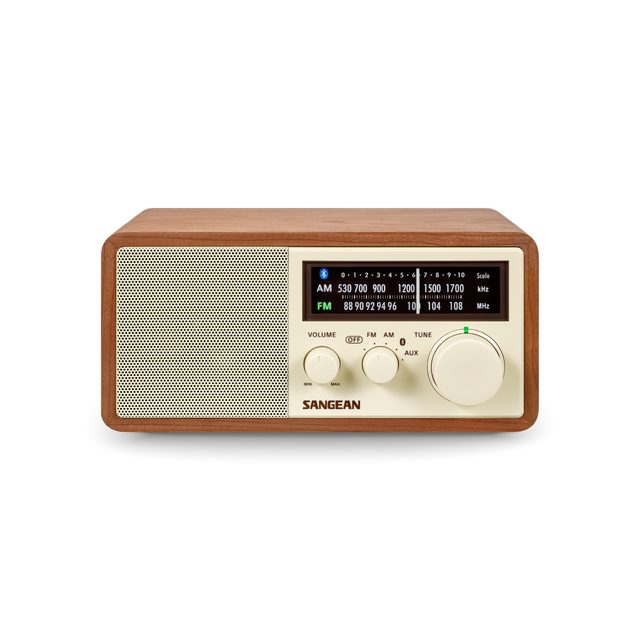 Product photograph, SangeanTop pick
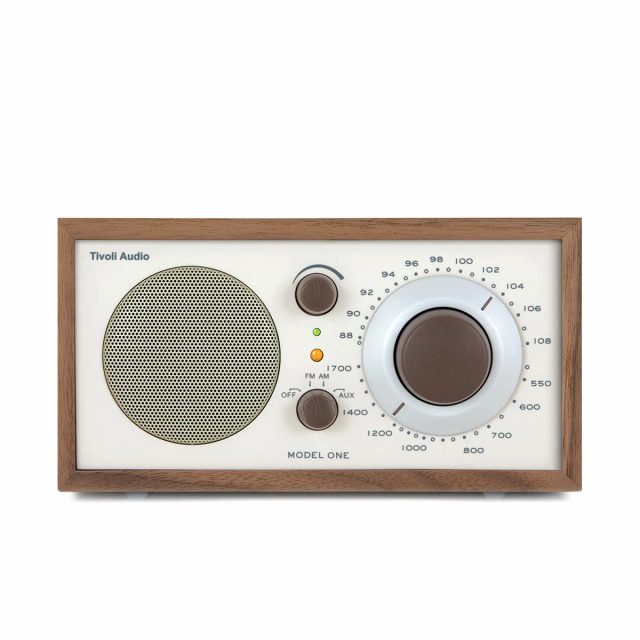 Product photograph, Tivoli Audio
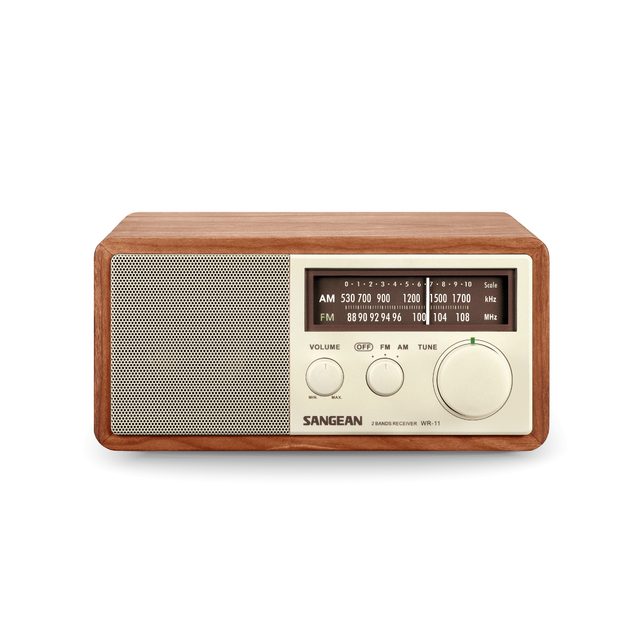 Product photograph, Sangean
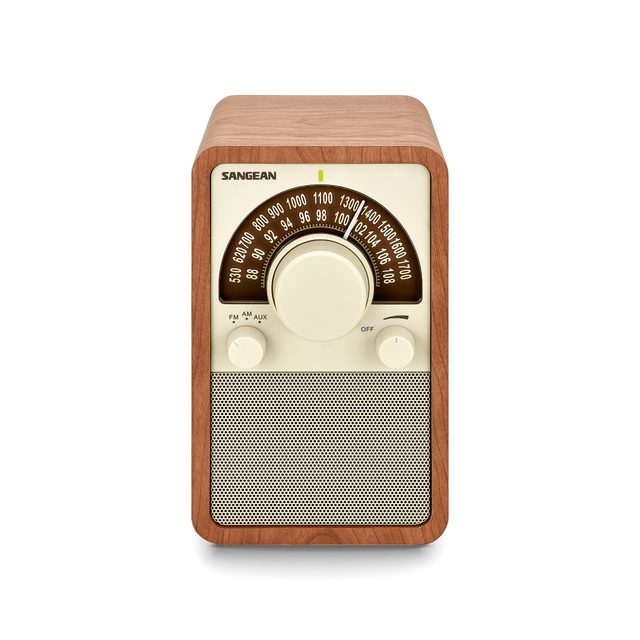 Product photograph, Sangean