A needle on a jewel bearing in a sealed capsule, which is the last navigation device with no power source.
A compass is the only navigation instrument that cannot run out of battery, lose signal or be switched off from somewhere else. What is inside is a magnetised needle on a jewel bearing in a capsule of fluid, and the fluid is the part that matters: it damps the swing so the needle settles in a second instead of wandering. Nothing in that wears. A good one is bought once, and the better ones carry a sighting mirror, a declination screw and a clinometer for reading slope.
Some buy links are affiliate links. If you buy through one we may earn a
commission, at no extra cost to you.
How this is funded.
At a glance: Compasses picks compared, with buy links
Made in Finland, with the three features that separate a serious compass from a keyring one: a sighting mirror with a notch, so a bearing is taken along the line of sight rather than guessed; an adjustable declination screw, set once for where you live; and a clinometer for reading slope angle, which is how avalanche terrain is judged. Four ounces, and no power source of any kind.
The compass the US military buys, and the only one here that reads in the dark without a torch: seven tritium micro lights glow for over twelve years with nothing powering them, because tritium decays whether you use it or not. Made in the USA to a military specification that covers shock, water and sand, which is a tougher specification than any consumer compass is held to.
Silva invented the liquid filled orienteering compass in Sweden in the 1930s and the Ranger is the descendant: mirror sighting, a built in declination adjuster and map scales at 1:25,000 and 1:50,000 printed on the baseplate, so the compass is also the ruler. The rubber grip is the only part that is not glass, brass or plastic.
The budget pick, and it is the same mechanism as the expensive ones where it counts: a high grade steel needle on a jewel bearing in a liquid filled capsule, made in the same Finnish factory. What it does without is the mirror, the clinometer and the adjustable declination. At an ounce it is the compass that actually gets carried.
Steel needle on a jewel bearing, liquid damped
Made in Finland
1.1 ounces
Fixed declination, northern hemisphere
The low cost option here
Weekly email
New picks, once a week.
One email a week with new picks. Unsubscribe any time.
Privacy.
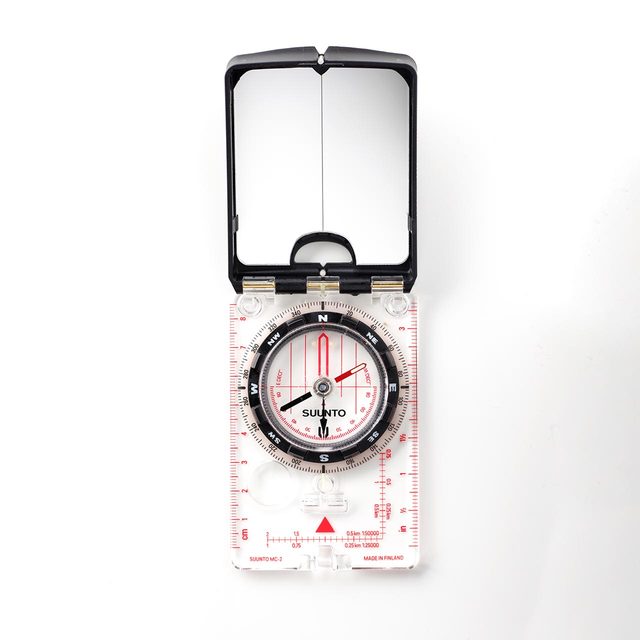 Product photograph, SUUNTOTop pick
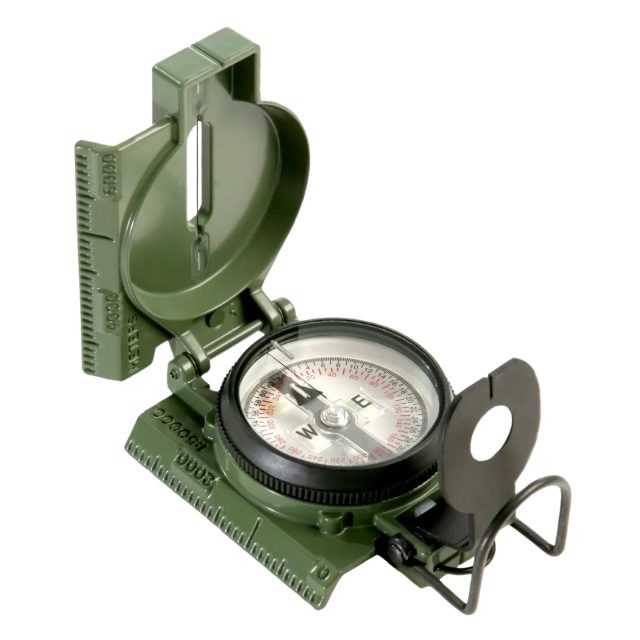 Product photograph, Cammenga
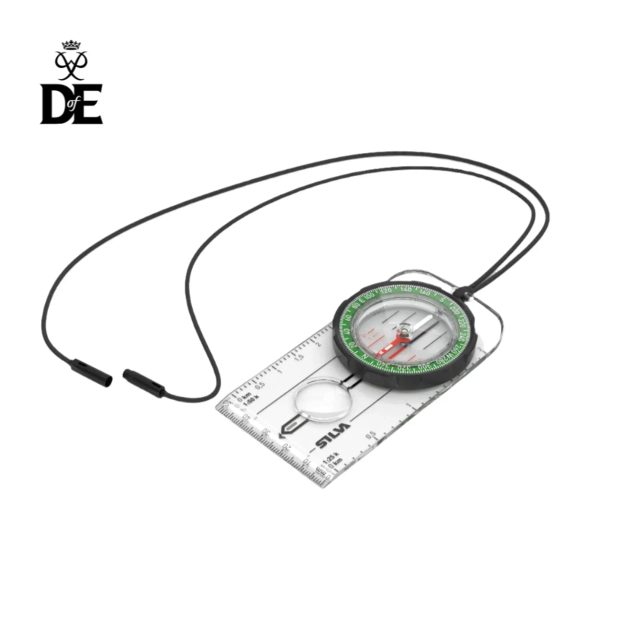 Product photograph, Silva
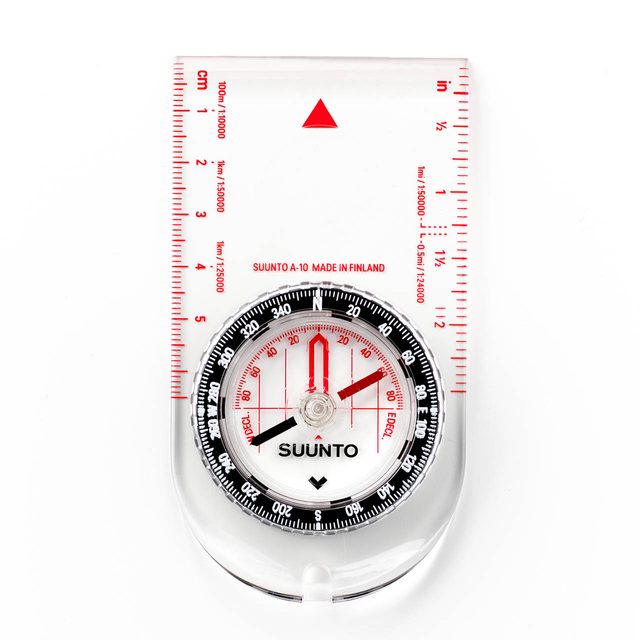 Product photograph, SUUNTO